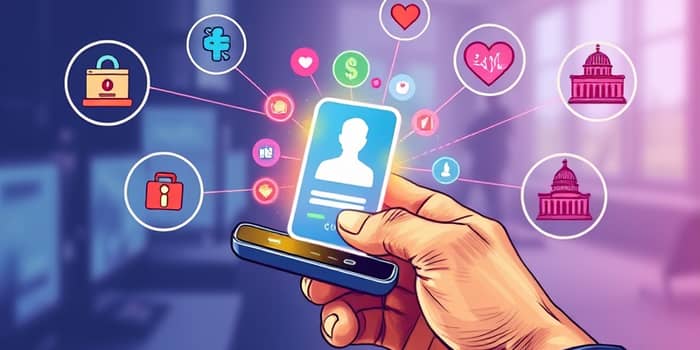
Every day, headlines announce another massive data breach, exposing millions of personal records to cybercriminals. Centralized systems have failed us, leaving our identities vulnerable and fragmented across countless platforms.
Imagine a world where you hold the keys to your digital self, free from the oversight of banks, governments, or corporations. Decentralized Digital Identity (DID) makes this possible, revolutionizing how we manage and protect who we are online.
This isn't just a technological shift; it's a movement toward empowerment, where privacy and security are built into every interaction. Your identity becomes truly yours, portable, verifiable, and under your sole control.
What Is Decentralized Digital Identity?
At its core, Decentralized Digital Identity is a model that allows individuals to own and manage their identity data without relying on central authorities. Unlike traditional systems where third parties store and control your information, DID puts you in the driver's seat.
It leverages advanced technologies like blockchain and cryptographic proofs to create unique identifiers and verifiable credentials. This eliminates single points of failure that have led to so many breaches in the past.
The essence of DID is self-sovereign identity, meaning you have full autonomy over your digital persona. You decide what to share, when to share it, and with whom, all from a secure digital wallet.
How Does the DID Model Work?
The ecosystem involves three key players working together to ensure seamless and secure identity management. Each has a distinct role that upholds the principles of decentralization.
- Issuer: Trusted entities like governments or universities that validate data and issue cryptographically signed verifiable credentials, such as proof of age or educational qualifications.
- Holder (User): You, the individual, who stores these credentials in an encrypted digital wallet and controls access through selective sharing and revocation.
- Verifier: Organizations or services that request proof, verifying its authenticity via digital signatures and blockchain records without storing your data.
The process is designed for efficiency and privacy. When you need to prove something, like your age for a service, you present only the necessary credential.
Through cryptographic techniques, such as Zero-Knowledge Proofs, the verifier can confirm validity without seeing sensitive details. This selective disclosure is a game-changer, protecting your privacy at every step.
Authentication methods are robust, using public-private key pairs or biometrics instead of weak passwords. This reduces fraud and enhances security across all interactions.
Key Technologies Enabling DID
Several cutting-edge technologies come together to make decentralized identity possible. These tools ensure that the system is tamper-proof, user-friendly, and scalable.
- Blockchain or Distributed Ledgers: Provide a decentralized, immutable registry for identifiers and revocation lists, preventing data manipulation.
- Cryptographic Proofs: Enable secure verification without exposing underlying data, with Zero-Knowledge Proofs allowing proofs like "over 18" without revealing full identification.
- Digital Wallets: Encrypted apps on devices like smartphones that store private keys and credentials, offering biometric protection and easy access.
- Unique Decentralized Identifiers (DIDs): Resolvable URIs on blockchain that point to public keys, ensuring identifiers are independent of any issuer.
Benefits of Decentralized Identity for Everyone
The advantages of DID extend far beyond individual users, impacting organizations and society as a whole. By shifting control to the individual, we create a more secure and efficient digital landscape.
For users, this means no more worrying about your data being sold or leaked. You regain sovereignty over your identity, with the power to share only what's necessary.
Organizations benefit from streamlined operations and enhanced trust. By not storing sensitive data, they reduce liability and build stronger relationships with customers.
Society sees a reduction in identity fraud and improved access to services for vulnerable groups, like refugees who lack traditional identification. This fosters inclusion and equity in the digital age.
Real-World Use Cases Across Sectors
DID isn't just theoretical; it's being implemented in various industries to solve real problems. From finance to healthcare, the applications are diverse and impactful.
- Displaced Persons and Refugees: Providing verifiable identity without central authorities, enabling access to essential services and reducing statelessness.
- Banking and Finance: Enabling rapid KYC checks and passwordless logins, cutting down onboarding times and enhancing security for transactions.
- Healthcare and Education: Offering portable medical records and academic credentials that are easily verified, improving continuity of care and credential fraud prevention.
- Government Services: Facilitating secure interactions for voting or benefits without extensive data storage, increasing transparency and trust.
- Entertainment and Age Verification: Allowing venues to confirm age without viewing full IDs, protecting privacy while complying with regulations.
- Web3 and Blockchain Applications: Integrating identity with decentralized networks for seamless participation in digital economies and communities.
These examples show how DID can transform everyday experiences. The potential spans over 20 use cases, including supply chain management and IoT device authentication.
Challenges and How to Overcome Them
While DID offers immense promise, it's not without hurdles. Addressing these challenges is key to widespread adoption and success.
- Need for Widespread Adoption: Interoperability between different DID systems requires broad acceptance across sectors and borders to be effective.
- User Management of Private Keys: Individuals must securely handle their cryptographic keys, which can be daunting for non-technical users without proper education and tools.
- Dependence on Mature Technology: Blockchain and related infrastructures need to evolve to handle scale and security demands without compromising performance.
Despite these obstacles, progress is being made. Initiatives in Europe and beyond are piloting DID solutions, driven by post-pandemic digital transformation. The momentum is growing, with a focus on user-friendly interfaces and robust standards.
The Future of Decentralized Identity
Looking ahead, DID is poised to become a cornerstone of our digital lives. As regulations like GDPR push for better data protection, decentralized models align perfectly with these goals.
- Growth in Adoption: Increased implementation in vulnerable sectors, with companies and governments investing in DID technologies to mitigate systemic risks.
- Move Towards Interoperability: Development of ecosystems where a single wallet works seamlessly across services and countries, enhancing global digital mobility.
- Alignment with Web3: Integration into decentralized web frameworks, promoting digital sovereignty and user empowerment in emerging online spaces.
The journey toward decentralized identity is just beginning. It represents a shift from fear to empowerment, where you can navigate the digital world with confidence and control. Embrace this change, and take charge of your identity today.
Referencias
- https://regulaforensics.com/es/blog/what-is-decentralized-identity/
- https://mojoauth.com/ciam-101/decentralized-identity-management
- https://icommunity.io/que-es-la-identidad-digital-descentralizada/
- https://www.crowdstrike.com/en-us/cybersecurity-101/identity-protection/decentralized-identity/
- https://telefonicatech.com/techiepedia/identidad-digital-descentralizada
- https://help.getonepass.eu/learn/decentralized-identity/introduction/benefits
- https://grupoadaptalia.es/blog/identidad-digital-descentralizada
- https://www.okta.com/blog/identity-security/what-is-decentralized-identity/
- https://www.bcdiploma.com/es/blog/what-is-a-did-definition-and-uses
- https://www.1kosmos.com/identity-management/decentralized-identity-complete-guide/
- https://veridas.com/es/identidad-digital-descentralizada/
- https://veridas.com/en/decentralized-identity/
- https://teknei.com/blog/como-funciona-la-identidad-digital-descentralizada/
- https://www.kaleido.io/blockchain-blog/use-cases-for-decentralized-identity
- https://www.signeblock.com/identidad-digital-descentralizada-el-futuro-en-la-web-3-n-9526-es